
 Türkçe tr
 English en
 Русский ru
 العربية ar
 Español es
 Português pt
 Azərbaycanca az
Robot-carried gun
The welding gun is mounted on the robot, which moves from spot to spot around a part held in a fixed fixture.
We build robotic spot welding cells that place every weld on sheet metal and body parts with the same force, current and position.
Robotic spot welding (resistance spot welding) is the use of a robot to join overlapping sheet metal parts by clamping them between two electrodes and passing an electric current through a single point. The robot brings the welding gun to every spot at the same angle and position, while the weld controller keeps force, current and weld time identical at each spot.
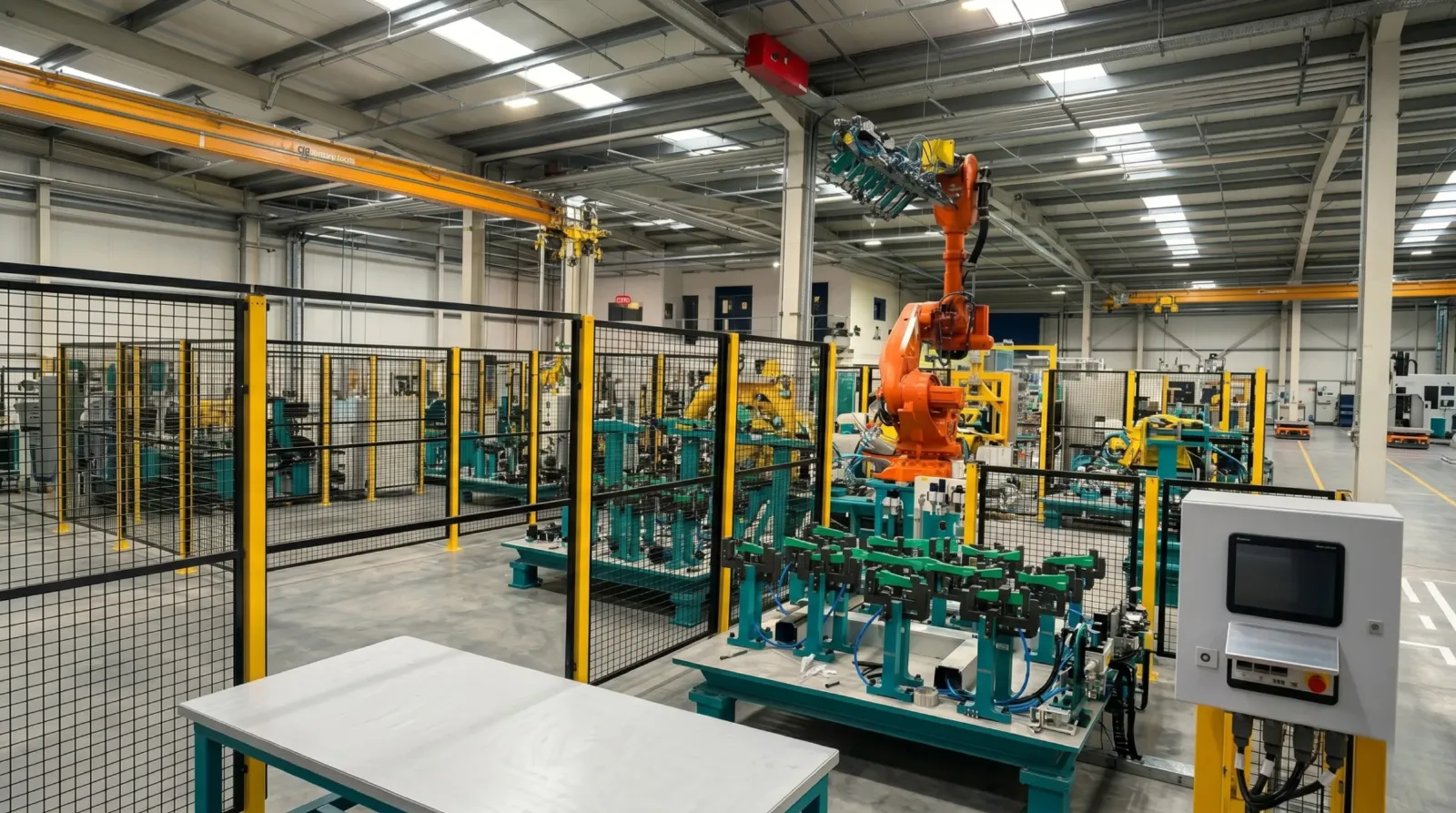
A spot welding cell typically consists of a high-payload robot, a servo or pneumatic welding gun, a weld controller, an electrode tip dresser, a cooling water unit and a part fixture. The robot can carry the gun, or it can pick up the part and present it to a stationary gun.
Automotive suppliers join body parts, brackets and reinforcements this way, and appliance manufacturers use it for cabinets and panels. Because the weld data for every spot is logged, the process is also fully traceable.

We define the cell layout with you based on part size, number of spots and line speed.
The welding gun is mounted on the robot, which moves from spot to spot around a part held in a fixed fixture.
The robot picks up the part and presents it to a stationary welding gun, shortening the cycle for small and medium parts.
Electrode force and closing speed are set in the program, giving more stable welds across different sheet thicknesses.
Automatic tip dressing and electrode changing keep weld quality steady throughout the shift.
With a turntable or two stations, the robot keeps welding while the operator loads the next part.
Current, force and time are logged for every spot, and out-of-range welds are flagged.
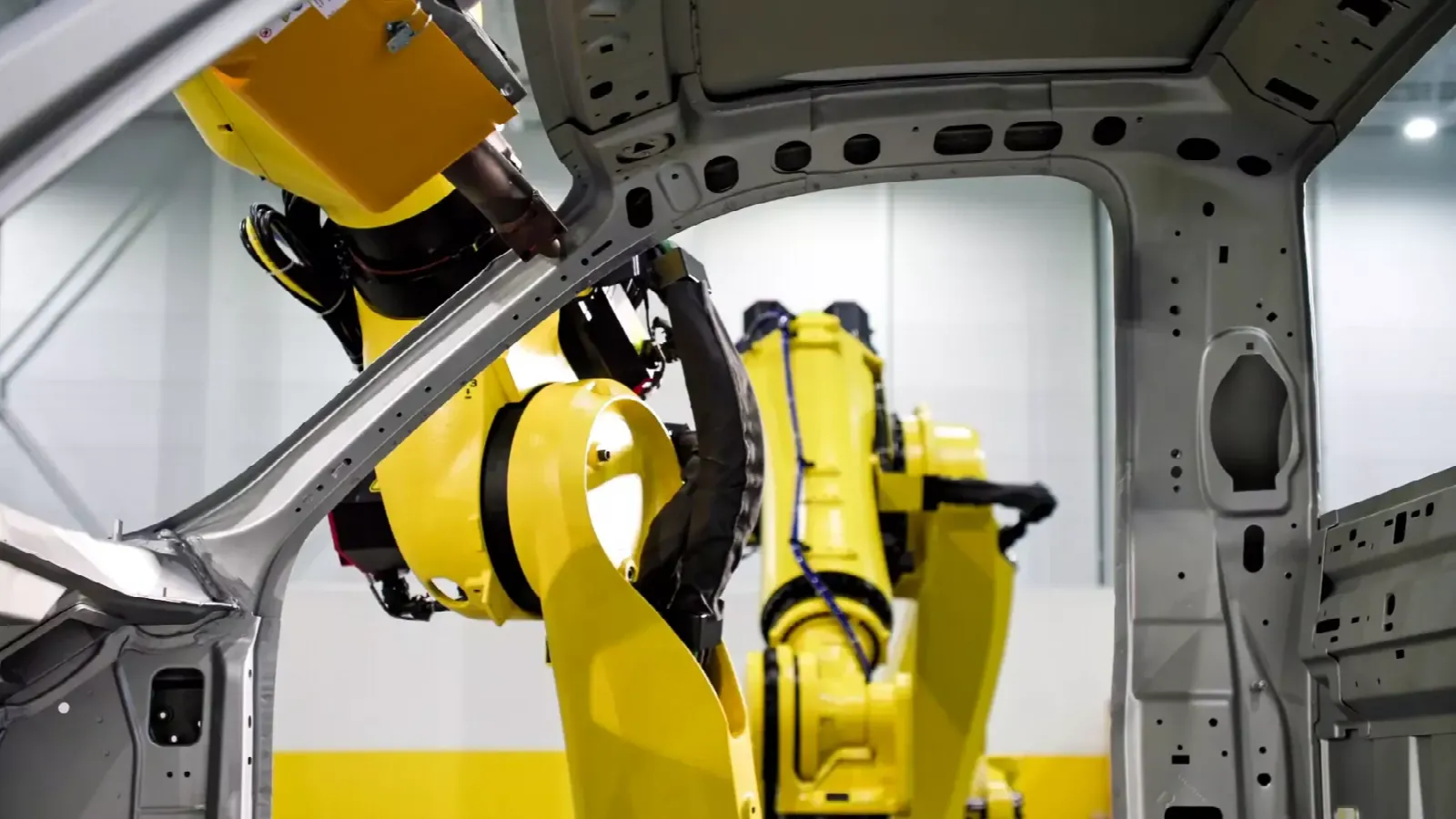
Results that vary from operator to operator in manual spot welding become identical on every part with a robot.
It is most efficient in series production of sheet metal parts joined with many weld spots.
Body parts, brackets, reinforcements and seat frames.
Cabinets, panels and inner sheet metal housings.
Cabinets, enclosures and box-type sheet metal products.
Cab, guard and body panels.
Panel enclosures and mounting plates.
Replacing the robot, gun and weld controller in older spot welding cells.
Share your application and goals, and together we will define the right robot cell, layout and investment plan for you.