
 Türkçe tr
 English en
 Русский ru
 العربية ar
 Español es
 Português pt
 Azərbaycanca az
Arc welding cells
Robot cells for arc welding processes, including MIG/MAG and TIG, with single or twin stations and positioners.
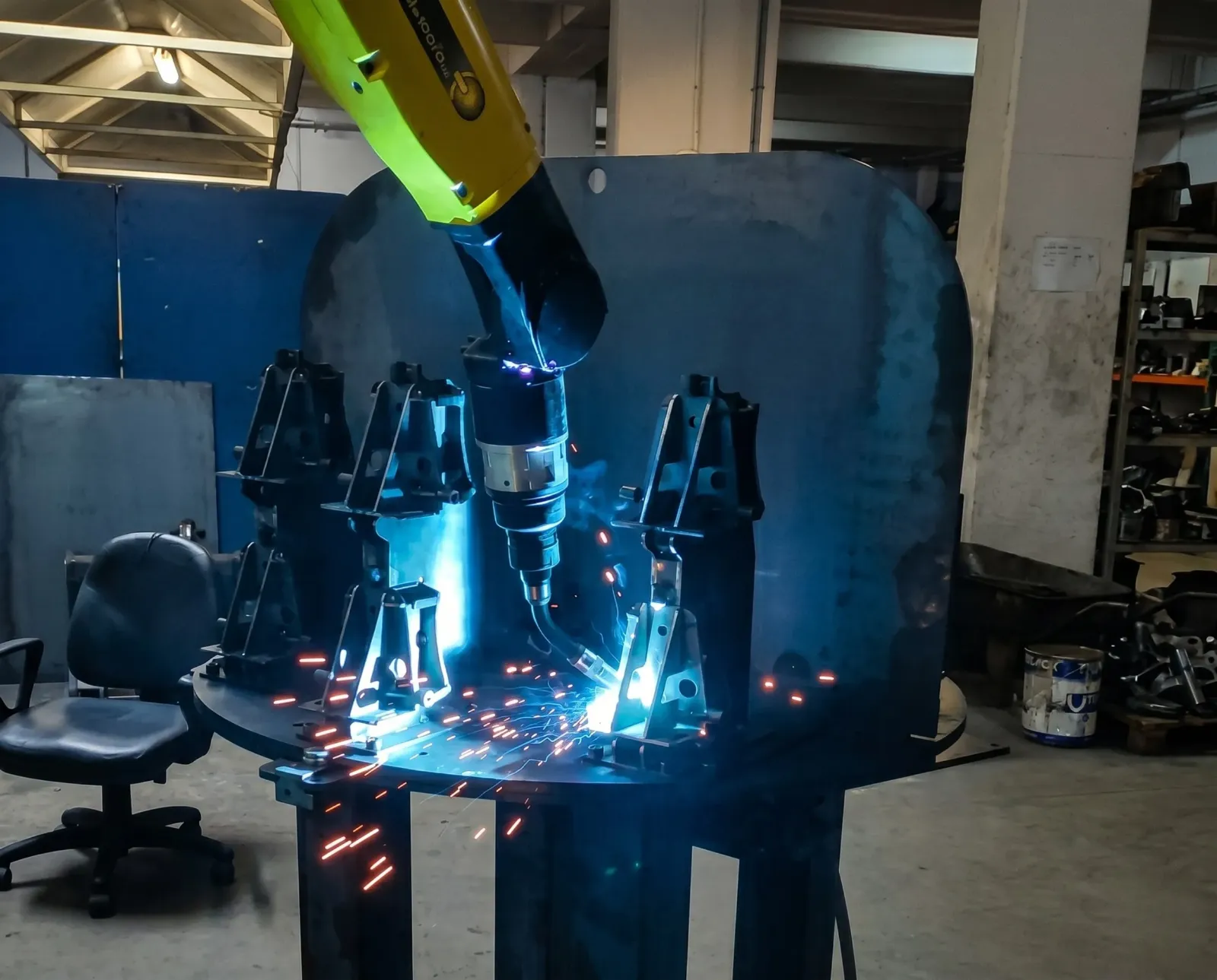
With robotic automation for arc, MIG, TIG, laser and spot welding, we deliver quality, speed and repeatability in production.
Robotic welding is the use of programmed industrial robots to perform arc, MIG, TIG, laser and spot welding. Because the robot welds every part with the same path, speed and parameters, quality is stabilized, cycle time is shortened and the operator is removed from a hazardous environment.
A robotic welding cell typically consists of a welding robot, a welding power source and torch, a fixture or positioner, fume extraction and safety fencing. In cells with a positioner, the operator loads the next part at the other station while the robot welds, so the equipment never sits idle.
The system reduces inconsistencies in welding processes, supports workplace safety and delivers more stable results in series production.
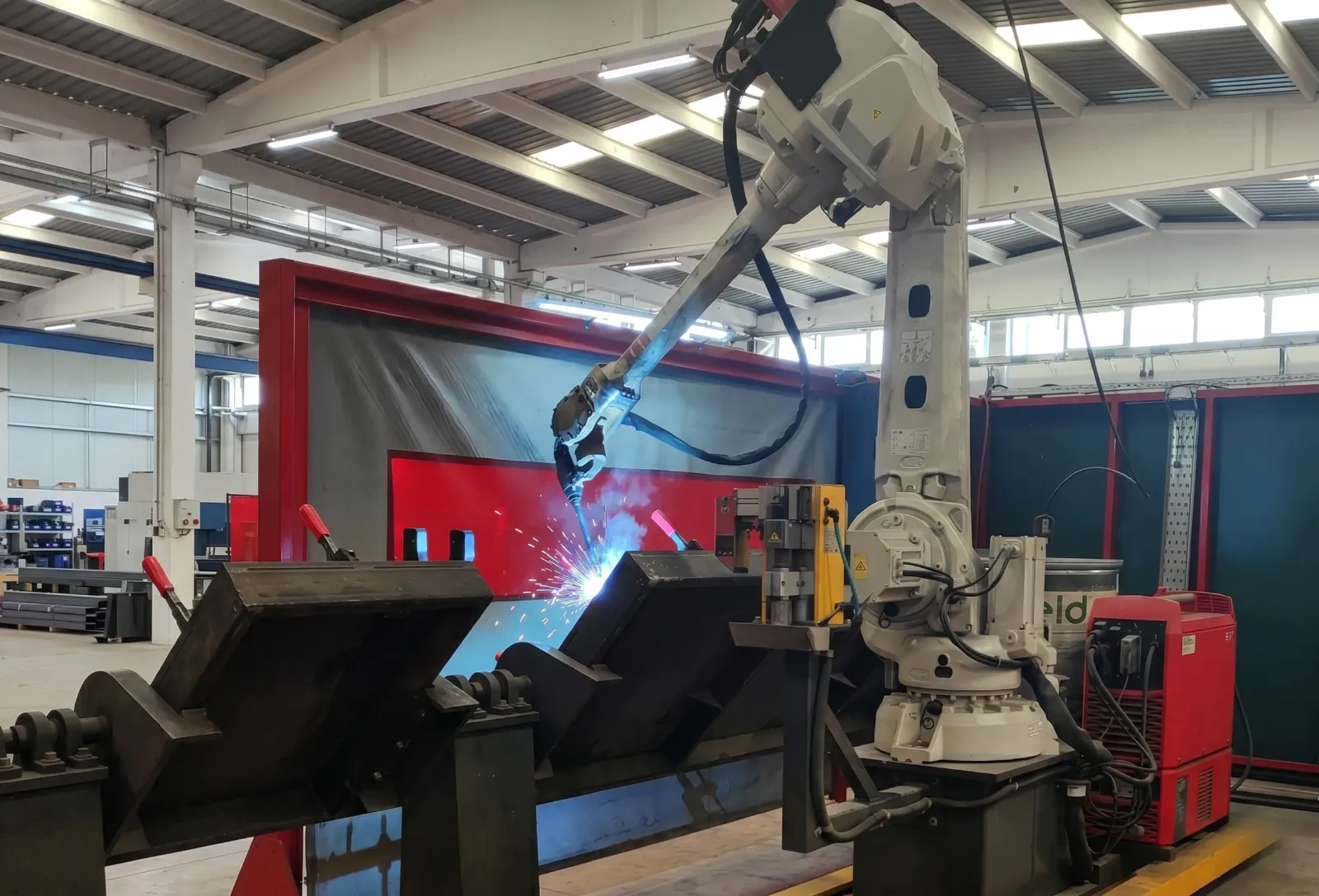
We develop robotic welding solutions for different materials and production requirements.
Robot cells for arc welding processes, including MIG/MAG and TIG, with single or twin stations and positioners.
An automation solution that delivers efficient, stable weld quality in high-speed production.
Clean, controlled, high-quality seams for applications that require precision welding.
Modern welding technology offering high precision, low heat input and minimal distortion.
Fast, strong and repeatable joining for sheet metal and series production.
Smart welding functions that detect part tolerances with sensors and correct the path automatically.
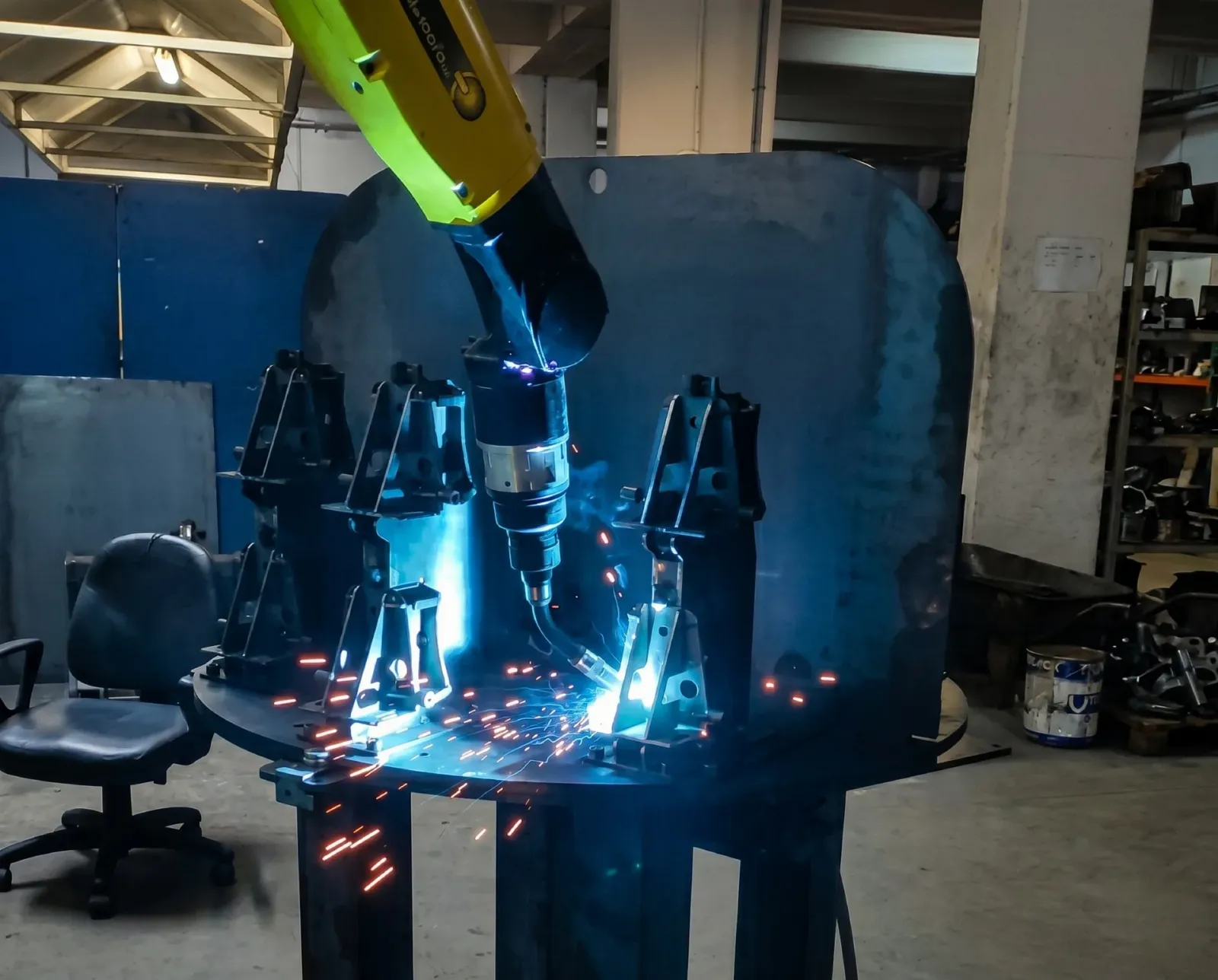
Robotic welding solutions raise quality standards while delivering speed, safety and operational efficiency.
It delivers efficient solutions across industries that require high quality, repeatability and safe production.
Chassis, body, brackets and high-volume welding operations.
Precision welding of steel, aluminum and other metal parts.
Machine frames, equipment parts and production support components.
Strong welding processes for columns, beams and structural steel parts.
Consistent quality and fast welding in high-volume production.
Flexible robotic welding solutions that can be integrated into different production lines.
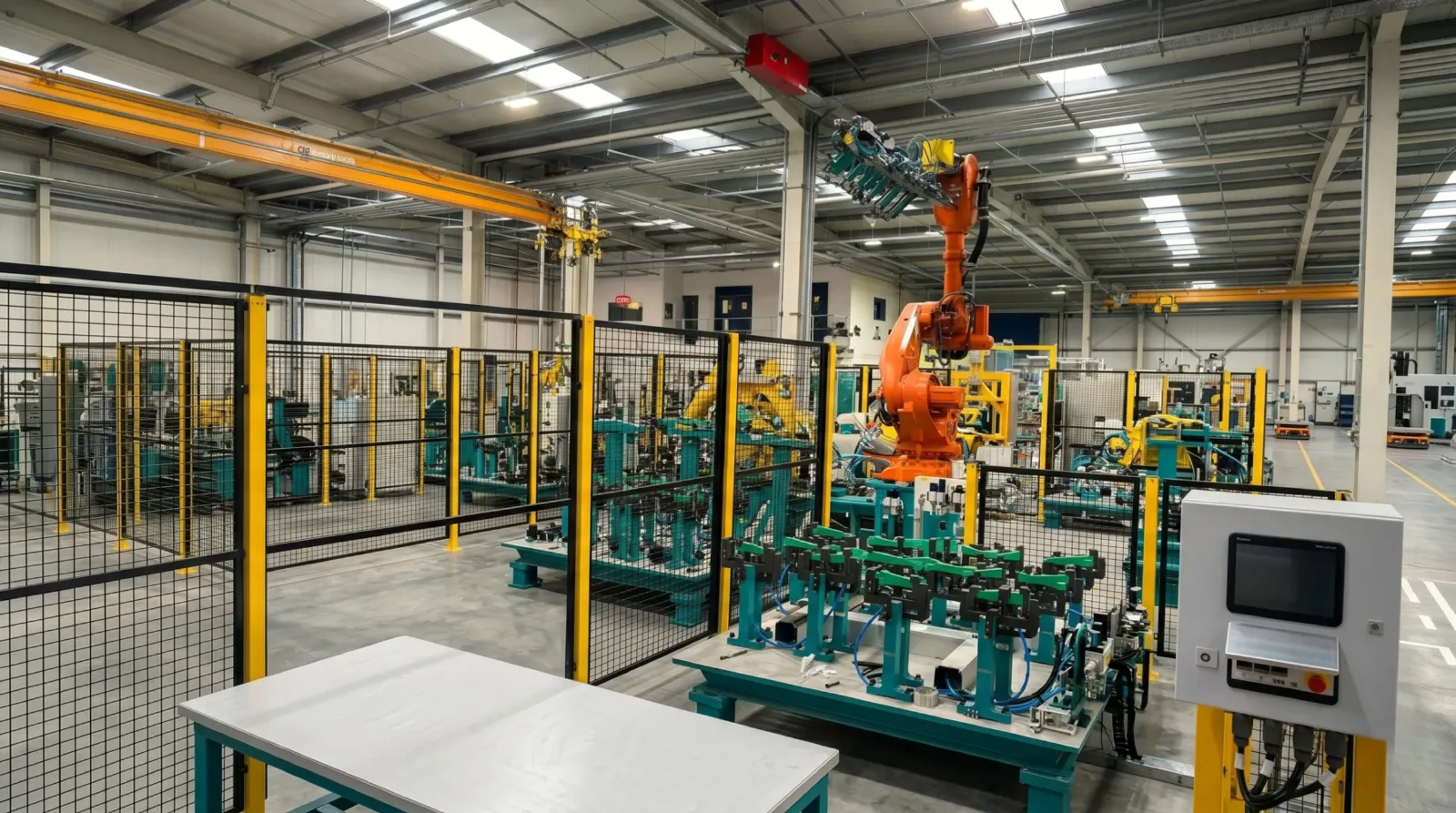
Share your application and goals, and together we will define the right robot cell, layout and investment plan for you.